
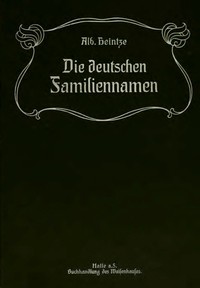
Die Deutschen Familiennamen, geschichtlich, geographisch, sprachlich by Heintze
First thing you need to know: this book is old news—as in from 1903 old news. But for sheer curiosity fodder, it’s still gold. Albert Heintze doesn’t just list names; he lines up clues like a detective. Imagine walking through medieval villages where most people were just ‘Fritz’ until the government said, ‘Okay, everyone pick a forever-last-name.’ Yes, it gets that geeky—but in the best way.
The Story
Heintze builds a case for German surname families. Start with Beruf names (jobs like leader = Meier; others like Kramer for shopkeeper, Vogt for overseer). A village back then might have one ‘Becker’ (baker), four ‘Müllers’ (millers—every town needed one), and that was that. Then come Orts names: if your ancestry moved from Prague upstream, you might be called Herzog (hermit meant duke? Not always). Person names? Like suddenly calling a tall guy Klein (small). The irony is thick. He lays out evidence of how regional accents turned the names—e.g., the same job name ''Tobias'' eventually became name ''Ferdinand'' in some dialects. And then there’s a map: Heintze traces how these last names spread north, south, east, west after the Thirty Years’ War, blending job leftovers with geographical tags. That mystery keeps rolling page after page—like, did your surname come from a little river or from the emperor's carpenter?
Why You Should Read It
It’s not exactly beach-read material (unless your beach has a library) but it hits me like a spy novel: your ancestors were marked by their second-harvest hay. I relate to the small-time Joes who ended up as -berger. It nails how history and housing shortage shaped identity from them all. Heintze’s absolute seriousness about pre-Verwaltung naming says something: people are lazy typists on records, names shift with who holds the record book. My big takeaway: no last name is random. That can weigh on identity—knowing them feels like tapping into family password vaults. You’ll read an unfamiliar period footnote and then zone out sharing wit, and after that, visiting other cultures’ naming systems won’t seem so distant. Yet it’s also just quietly fun how farming, wars, pet names and hamlet moves got stamped in casual words now are family heirlooms.
Final Verdict
Pull this title if: You crave bizarro genealogist anecdotes? Perfect. If your German class covered grammar, not nicking neighbors for surnames—same offer. For general page-turnability—honest: dry patches (especially regulations for record change rules). Compensation? New armor to peacock in 19th-century genealogy meetups. Who this is for when sleepy break?
- History day-job weird who brags on alternate HRE topography evidence 🍻
- Hip name-nerdery types wondering on cultural onomastics clues. If want road map from nothing? Pass.
This is a copyright-free edition. Access is open to everyone around the world.
Ashley Lopez
1 year agoThe layout of the digital version made it easy to start immediately, the chapter on advanced strategies offers insights I haven't seen elsewhere. Top-tier content that deserves more recognition.
Linda Anderson
6 months agoHaving followed this topic for years, I can say that the cross-referencing of different chapters makes it a great study tool. This has become my go-to guide for this specific topic.
Richard Taylor
8 months agoA sophisticated analysis that fills a gap in the literature.
Linda Thompson
11 months agoThis digital copy caught my eye due to its reputation, the author manages to bridge the gap between theory and practice effectively. I feel much more confident in my knowledge after finishing this.


Patricia Jones
5 months agoThis digital copy caught my eye due to its reputation, the bibliography and references suggest a high level of research and authority. This is a solid reference for both beginners and experts.