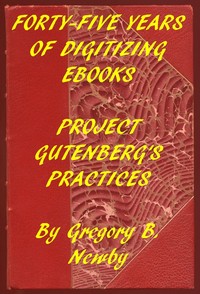
Forty-Five Years of Digitizing Ebooks: Project Gutenberg's Practices by Newby
Most of us know Project Gutenberg as that magical website where you can download Pride and Prejudice or Moby-Dick for free in sixty seconds. Gregory Newby's book pulls back the curtain on the forty-five-year scramble that made that magic happen. It starts with founder Michael Hart typing the U.S. Declaration of Independence into a university computer in 1971, creating the very first "ebook" before the word even existed. From there, it's a rollercoaster ride through the birth of the internet.
The Story
The plot is a battle on two fronts. First, there's the technological marathon. The book walks you through the evolution from typing books on punch cards and early modems to dealing with floppy disks, CD-ROMs, and finally the modern web. Every time they mastered a format, it became obsolete. Second, and more dramatic, is the legal and philosophical fight. As commercial publishers woke up to the digital world, Project Gutenberg's mission of "free" often put them at odds with new interpretations of copyright. The story is told through the volunteers—librarians, programmers, and retirees—who spent countless hours proofreading and formatting, driven by a shared belief that literature should belong to everyone.
Why You Should Read It
This book completely changed how I see that little "www.gutenberg.org" in my browser. It's not a corporate product; it's a monument to human generosity. Newby, who led the project for years, writes with a clear, firsthand passion. You feel the frustration of a server crash wiping out months of work and the triumph of hitting a milestone like 10,000 books. It reframes the internet's story from one of venture capital and social media to one of quiet, persistent altruism. It made me appreciate that the free access we take for granted was fought for, line by line, by volunteers around the globe.
Final Verdict
Perfect for curious readers who love books and wonder how the internet really works. If you're a fan of hidden histories, tech nostalgia, or stories about passionate underdogs, you'll be hooked. It's also a great pick for anyone feeling cynical about the modern web; it's a powerful reminder that the internet was built, in part, by people who just wanted to share stories. You'll never download a free classic the same way again.
This book is widely considered to be in the public domain. Knowledge should be free and accessible.
David White
10 months agoI decided to give this a try based on a colleague's recommendation, the footnotes provide extra depth for those who want to dig deeper. Simple, effective, and authoritative – what else could you ask for?
Mason Anderson
1 year agoSurprisingly enough, the pacing is just right, keeping you engaged. Worth every second.
Robert Williams
2 years agoI have to admit, the flow of the text seems very fluid. Exceeded all my expectations.
James Brown
1 month agoHaving followed this topic for years, I can say that the data points used to support the main thesis are quite robust. A refreshing and intellectually stimulating read.