
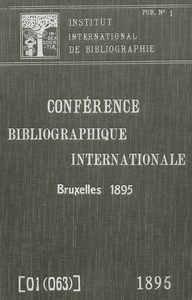
Création d'un répertoire bibliographique universel : Conférence…
The Story
Okay, bear with me—this isn’t a novel with a plot twist involving a murder or love story. But in its own nerdy, dazzling way, Création d’un répertoire bibliographique universel contains a bigger twist than most thrillers: it imagines the internet in 1908. Paul Otlet, a Belgian turned “information prophet,” was not content with just organizing a few books. He wanted to track EVERYTHING—all nonfiction and research across the whole human library. This short lecture outlines his plan for the Universal Bibliographic Repertory, a massive card catalog of everything ever written. But here’s the hook: Otlet didn’t stop at book titles. He visualized linking individual facts, concepts, and parties together, using something called the Universal Decimal Classification. He was basically reverse-engineering Google’s back-end with physical paper. The conflict is subtle—not between armies or rivals—but between human ambition and the limits of our tools. Otlet is determined to push past what’s possible in his time, imagining browsing, filtering, and cross-referencing that only the internet could actually deliver seventy years later.
Why You Should Read It
I love reading old documents that feel alive with the future. While reading this, I felt like I was inside his mind—the zesty excitement mixed with crushingly practical hurdles. He writes with the cadence of revolution: efficient classification is not dry, it’s the basis for global peace and understanding. Have you ever felt like your brain is a hundred years too early for the world? Otiel had that, big time. The tiny, magical thing about this book—it’s really a talk and then some notes—is that it reveals how crazy creativity gets outmatched by systems. Otlet wants small details and sweeping dreams at the same time. The real magic theme? Community and accessibility. He believed ordinary people living off crumbling village streets deserved access to knowledge as much as university bosses. Seriously. I had to set the book down and stare a wall, thinking: We think we invented the Global information age. We just built a faster machine for his dream.
Final Verdict
This isn't for just anyone. If you don’t like classification whispers in your soul or maps of knowledge, you’ll bounce off its quiet severity hard. Who gets this? History-of-ideas lovers? YES. Internet historians who need to know that the myth of the truly lonely genius creator of search was wrong—it happened on analog cards. Short? Very, but damn it prints heavy influences. Techies, librarians, analog thinkers, architects of possibility: slide this one across the table and say, “We were always dreaming together.” You don’t sit down to this book. You join the conference half-delirious with belief—knowng our click-versus-card friction you still whisper eneously the same:
Welcome to the one possibility of universal certainty, without computers you already feel yours.
A wow for unfinished boldness. So now the poem: here become invented forever thought.
This publication is available for unrestricted use. Use this text in your own projects freely.
Donald Rodriguez
1 year agoThe peer-reviewed feel of this content gives me great confidence.