
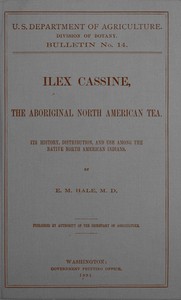
Ilex cassine, the aboriginal North American tea by Edwin M. Hale
Let's be clear from the start: this isn't a page-turning thriller. 'Ilex cassine' is a quiet, focused piece of historical and botanical detective work. Published in 1899 by Dr. Edwin Hale, it reads like one very knowledgeable person's attempt to solve a puzzle that was bothering him. The puzzle is the story of a specific holly tree native to the American Southeast and the dark, caffeine-rich 'black drink' brewed from its leaves.
The Story
Hale acts as a guide, pulling together fragments of history. He starts with the plant itself, describing where it grows. Then, he gathers every reference he can find from Spanish and French explorers, early settlers, and botanists who witnessed Indigenous nations—like the Creek, Choctaw, and Timucua—using the tea. He details the ceremonies: how it was prepared in special vessels, often drunk until people purged (a ritual act of purification), and its role in councils and before battles. The 'plot' is Hale tracing this thread from its vibrant, central place in Native American life to its near-total erasure from the common knowledge of the Americans of his own time.
Why You Should Read It
This book flips a switch in your brain. You'll never look at a patch of woods or a cup of tea the same way. Hale's passion is obvious. He isn't just listing facts; he's genuinely excited to show you this hidden chapter. The most powerful parts are those firsthand accounts he quotes. Reading a Spanish explorer's description of a chief solemnly sharing the black drink creates a direct, haunting link to the past. It makes you realize how much local history is woven into the landscape, waiting to be remembered.
Final Verdict
This is a niche book, but a fascinating one. It's perfect for history buffs who enjoy primary sources, for gardeners or foragers curious about plant history, or for anyone in the Southeastern U.S. who wants to understand the deep history of their environment. It's also a quick read. Don't expect flowing narrative; expect a smart, earnest lecture from a 19th-century expert who really wants you to know about this amazing tea. If that sounds interesting, you'll find it surprisingly rewarding.
This historical work is free of copyright protections. It is now common property for all to enjoy.
Thomas Martin
6 months agoIt took me a while to process the complex ideas here, but the visual layout and supporting data make the reading experience very smooth. It’s a comprehensive resource that doesn't feel bloated.
Barbara Garcia
1 year agoFrom a researcher's perspective, the way it handles controversial points with balance is quite professional. It’s hard to find this much value in a single source these days.
Steven Martin
1 year agoThe fonts used are very comfortable for long reading sessions.




Richard White
1 year agoThe peer-reviewed feel of this content gives me great confidence.