
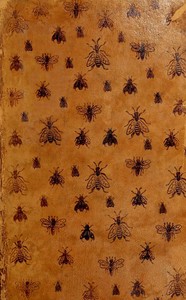
La vie des abeilles by Maurice Maeterlinck
Forget everything you think you know about nature documentaries. Maurice Maeterlinck's The Life of the Bee isn't a dry scientific text. It's a poet's deep, obsessive dive into a single beehive, treated with the gravity of a Shakespearean court.
The Story
There isn't a plot in the traditional sense. Instead, Maeterlinck invites you to pull up a chair and watch the hive with him for a full year. He guides us through the cycles: the spring awakening, the intense summer labor, the creation of new queens, and the dramatic, often violent, swarming events. He paints vivid pictures of the worker bees' selfless toil, the queen's singular role as mother to the colony, and the drones' brief, doomed existence. The central 'character,' in a way, is the hive itself—this pulsing, humming entity that seems to operate with a single will. The book's tension comes from Maeterlinck's own struggle to understand the source of that will.
Why You Should Read It
What grabbed me was Maeterlinck's sense of awe. He doesn't just observe; he marvels. He gets philosophical, asking if the hive's perfect organization points to a divine plan or is just magnificent, blind instinct. His writing is beautiful and accessible, turning the bees' 'waggle dance' into a moment of pure wonder. Reading it, you start to see the hive not as a bunch of bugs, but as a single, ancient, and incredibly complex society. It makes you question where instinct ends and something we might call collective wisdom begins. It's less about bee facts (though you'll learn plenty) and more about seeing the natural world as a profound mystery.
Final Verdict
This book is perfect for curious minds who love nature, but want more than just a field guide. It's for readers who enjoy beautiful, thoughtful prose and big questions wrapped in a small package. If you've ever stared at a beehive and wondered what on earth is going on in there, Maeterlinck is your passionate, slightly poetic tour guide. It's a classic for a reason—a quiet, mesmerizing book that sticks with you long after you've put it down.
This title is part of the public domain archive. Thank you for supporting open literature.
Nancy Hernandez
5 months agoI appreciate how this edition approaches the core problem, the bibliography and references suggest a high level of research and authority. This should be on the reading list of every serious professional.
Karen Brown
9 months agoI've gone through the entire material twice now, and the inclusion of diverse viewpoints strengthens the overall narrative. It definitely lives up to the reputation of the publisher.
Paul Miller
5 months agoThis digital copy caught my eye due to its reputation, the quality of the diagrams and illustrations (if applicable) is top-notch. This adds significant depth to my understanding of the field.
Charles Martinez
2 months agoI appreciate the objective tone and the evidence-based approach.




George Thompson
8 months agoInitially, I was looking for a specific answer, but the nuanced approach to the central theme was better than I expected. I'm glad I chose this over the other alternatives.