
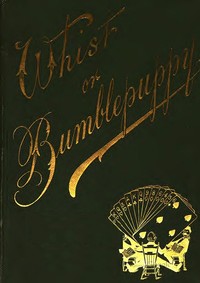
Whist; or, Bumblepuppy? Thirteen Lectures Addressed to Children by John Petch Hewby
Okay, let's get this straight: this is not a novel. There's no dashing hero or hidden treasure. John Petch Hewby's 1880s book is literally thirteen lectures on how to play the card game Whist properly. He frames them as talks for children, but the wink to the reader is obvious from page one.
The Story
The 'story' is the battle between good Whist and bad Whist. Hewby gives the bad version a name: Bumblepuppy. A Bumblepuppy player is selfish, ignores their partner, breaks the rules, and ruins the game for everyone. Through these lectures, Hewby patiently—and with growing, mock-serious outrage—explains not just the rules of the game, but the principles behind them: paying attention, cooperating, thinking ahead, and playing fair. He builds a case, point by point, for why being a good Whist player means being a considerate and intelligent person. The drama is in every exasperated example of a Bumblepuppy blunder.
Why You Should Read It
I picked this up as a curiosity and ended up dog-earing half the pages. Its magic is in the voice. Hewby is funny, clever, and his frustration is so relatable. Reading it, you realize he's not really talking about cards. He's talking about how to be in the world with other people. The lessons on partnership, foresight, and not being a selfish nuisance apply to work, family, and friendship. It's a etiquette guide disguised as a game manual, delivered with the dry wit of a British comic. I found myself laughing out loud at his descriptions of terrible players, then pausing to think, 'Wait, do I do that?'
Final Verdict
This is a perfect little book for anyone who loves social history, vintage humor, or just wonderfully odd books. It’s for the reader who enjoys a sharp, opinionated voice from the past and doesn't mind learning about a game they'll probably never play. If you like Mark Twain's cranky essays or the idea of a 19th-century 'How to Win Friends and Influence People' for the card table, you'll adore this. It’s a short, sparkling reminder that good rules—in games or in life—exist for a reason, and that ignoring them makes you a Bumblepuppy.
The copyright for this book has expired, making it public property. Distribute this work to help spread literacy.
Donna Allen
1 year agoWithout a doubt, it creates a vivid world that you simply do not want to leave. I would gladly recommend this title.
Robert Young
1 year agoVery helpful, thanks.
Dorothy Thomas
4 months agoNot bad at all.
Noah Garcia
1 year agoCitation worthy content.










Jessica Martin
1 year agoFive stars!